Aquamarine
Appearance:
Aquamarine is a captivating semiprecious gemstone known for its serene blue color, reminiscent of the clear waters of the sea. It is a member of the beryl mineral family, which also includes emerald. Aquamarine comes in various shades of blue, ranging from pale, almost transparent blue to deep, vibrant blue. The stone often has a transparent or translucent appearance, allowing light to pass through and enhancing its beauty. Aquamarine's clarity and lustrous brilliance contribute to its allure.
Origin and Composition:
Aquamarine is primarily found in Brazil, Madagascar, Russia, Nigeria, and the United States. It forms in pegmatite rocks, which are coarse-grained igneous rocks that cool slowly beneath the Earth's surface. The stone's blue color is due to the presence of trace amounts of iron in its crystal structure. Aquamarine belongs to the beryl family and shares its chemical composition with other beryl gemstones, consisting of beryllium aluminum cyclosilicate.
Energy and Healing Properties:
Aquamarine is believed to possess various energy and healing properties, making it a sought-after gemstone for both its aesthetic and metaphysical qualities. Some of the properties attributed to aquamarine include:
- Calming and soothing energy
- Enhancing clear communication and self-expression
- Promoting feelings of tranquility and inner peace
- Stimulating creativity and inspiration
- Supporting emotional healing and encouraging courage
History and Use in Jewellery:
Aquamarine has a rich history dating back centuries. The stone was highly regarded by ancient civilizations, including the Egyptians, Greeks, and Romans. The Egyptians considered aquamarine as a symbol of happiness and eternal youth. In medieval times, aquamarine was believed to possess mystical powers to protect sailors and ensure a safe voyage across the seas.
Aquamarine is widely used in jewellery, especially in rings, necklaces, bracelets, and earrings. Its tranquil blue color and elegant sparkle make it a popular choice for both statement pieces and everyday wear. It is often cut into various shapes, including emerald cuts, oval cuts, and round brilliant cuts, to enhance its beauty and showcase its natural clarity. Aquamarine is also a favoured gemstone for March birthdays and is associated with the zodiac sign of Pisces.

In conclusion, aquamarine is a mesmerizing gemstone with its captivating blue hues, notable origin and composition, and believed energy and healing properties. Its long history and versatility in jewellery have solidified its place as a cherished and valuable gemstone sought after by gem enthusiasts and jewellery lovers worldwide.

Rock quartz
Origin
Clear Quartz, also known as Rock Crystal, is a mineral that belongs to the group of silicate minerals and is composed of silicon dioxide (SiO2). It is one of the most abundant minerals in the Earth’s crust and is found in many different geological environments around the world.
Appearance
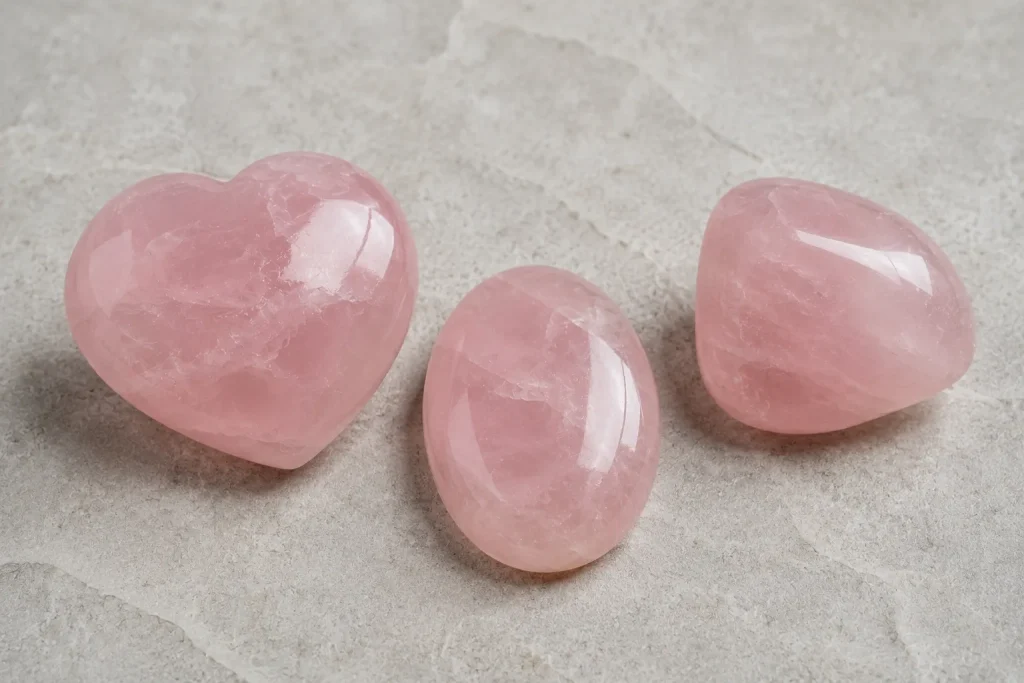
Clear Quartz is a transparent or translucent mineral that typically has a glassy and smooth texture. It has a hexagonal crystal structure, and its colour can range from clear to milky white, grey, or even pink, yellow, or green due to the presence of impurities.
Properties
Clear Quartz has long been recognized for its healing and energy properties. It is believed to be a powerful energy amplifier that can enhance the energy of other stones and crystals. It is also considered a master healer that can help balance and align the chakras, boosts the immune system, and promote overall well-being.
- Enhances and amplifies the energy of other stones and crystals
- Balances and aligns chakras
- Promotes physical and emotional healing
- Boosts the immune system and overall well-being
- Helps with concentration and clarity of thought
- Enhances spiritual growth and intuition
- Increases awareness and mindfulness
- Clears negative energy and purifies the environment
- Facilitates communication and connection with higher consciousness
- Promotes harmony and balance in relationships and environments
- Aids in meditation and relaxation
- Alleviates headaches, digestive issues, and immune system disorders
- Provides protection against negative energies and psychic attacks
- Promotes overall energy and vitality
Clear Quartz is often used in meditation and spiritual practices, as it is believed to enhance spiritual growth, intuition, and clarity of thought. It is also used in crystal healing to alleviate physical ailments, such as headaches, digestive issues, and immune system disorders.
Clear Quartz is a popular mineral with a long history of use for its healing and energy properties. Its transparent appearance and composition make it a beautiful addition to any collection, and its versatility and benefits make it a valuable tool in spiritual and healing practices.
Use in jewellery
Clear Quartz has a long history of use in jewellery, dating back to ancient times. The ancient Greeks and Romans believed that Clear Quartz was a form of ice that was so cold and hard that it could not melt. They also believed that Clear Quartz had the power to increase one’s intuition and clarity of thought.
In ancient Egypt, Clear Quartz was carved into amulets and used in jewellery for its healing and protective properties. It was also believed to help with communication with the gods and goddesses.
In the Middle Ages, Clear Quartz was used in talismans and amulets to protect against negative energies and to enhance the power of spells and magic. It was also used in religious artefacts, such as crosses and rosaries.
In modern times, Clear Quartz continues to be a popular choice for jewellery due to its beauty, versatility, and healing properties. It is often used in crystal healing jewellery, such as bracelets, necklaces, and earrings, as well as in pendants and rings.

Malachite
Malachite is a striking semiprecious gemstone known for its vibrant green colour and unique banded patterns.
Appearance: Malachite is a copper mineral that typically appears in bands or concentric rings of various shades of green. Its appearance can range from a light green to a deep forest green, depending on the concentration of copper within the stone. Malachite is often found alongside other copper minerals such as azurite and chrysocolla.
Origin and Composition: Malachite is found in many locations around the world, including Russia, Zambia, and the Democratic Republic of Congo. It is formed from the weathering of copper ores and is often found in association with copper deposits. Malachite is composed of copper carbonate hydroxide and is a relatively soft stone, with a Mohs hardness of 3.5-4.
Energy and Healing Properties: Malachite is believed to have many energy and healing properties, making it a popular stone for those interested in alternative medicine. Some of the properties attributed to malachite include:
- Enhancing creativity and imagination
- Promoting inner peace and harmony
- Helping to release negative emotions
- Reducing stress and anxiety
- Boosting the immune system
Difference between artificial and natural malachite: While natural malachite is highly sought after for its unique beauty and energy properties, there are also many artificial or manmade versions of the stone available on the market. These artificial versions are typically made by combining a resin or other material with small pieces of natural malachite to create a composite material that looks similar to natural malachite.
One key difference between natural and artificial malachite is that natural malachite will have unique patterns and banded lines, whereas artificial malachite will often have a more uniform appearance. Additionally, natural malachite is a softer stone that can be scratched or damaged more easily than artificial malachite, which is often more durable due to the added materials used in its creation.
History and Use in Jewellery: Malachite has been used for thousands of years in jewellery and decorative objects. It was highly valued by the ancient Egyptians, who used it to make jewellery, amulets, and other decorative items. In more recent times, malachite has been used to make a wide range of jewellery, including necklaces, bracelets, and earrings.

Azurite
Azurite is a stunning blue semiprecious gemstone that is highly sought after for its unique appearance and energy properties.
Appearance: Azurite is a copper mineral that is typically blue in colour, ranging from light blue to deep navy. It often appears alongside green malachite, creating a striking contrast of colours. Azurite's vibrant blue hue is due to the presence of copper ions in its crystal structure.
Origin and Composition: Azurite is primarily found in copper deposits and is often associated with other copper minerals such as malachite and chrysocolla. It is found in many locations around the world including the USA, Australia, China, and Morocco. Azurite is formed from the oxidation of copper minerals in the presence of water, which creates the blue crystals that are characteristic of this gemstone.
Energy and Healing Properties: Azurite is believed to have many energy and healing properties, making it a popular stone for those interested in alternative medicine. Some of the properties attributed to azurite include:
- Enhancing intuition and psychic abilities
- Promoting inner wisdom and clarity
- Reducing stress and anxiety
- Enhancing creativity and imagination
- Improving communication skills
History and Use in Jewellery: Azurite has been used for thousands of years in jewellery and decorative objects. It was highly valued by ancient civilisations such as the Egyptians and Greeks, who used it to make decorative objects and jewellery. In more recent times, azurite has been used to make a wide range of jewellery, including necklaces, pendants, and earrings.
Whether worn as jewellery or used for its energy and healing properties, azurite is a wonderful addition to any collection.

Sodalite
Sodalite is a gorgeous semiprecious gemstone with a deep blue colour and white streaks or patches.
Appearance: Sodalite is typically a rich blue colour with white streaks or patches throughout the stone. It is often compared to lapis lazuli due to its similar appearance, but sodalite is usually a darker blue with fewer visible specks of pyrite or other minerals. Some varieties of sodalite may also contain yellow or greenish-brown streaks.
Origin and Composition: Sodalite is found in many locations around the world, including Brazil, Canada, and the United States. It is formed from sodium-rich magmas that have undergone crystallization. Sodalite is composed of sodium, chlorine, silicon, aluminum, and oxygen, and is a relatively hard stone with a Mohs hardness of 5.5-6.
Energy and Healing Properties: Sodalite is believed to have many energy and healing properties, making it a popular stone for those interested in alternative medicine. Some of the properties attributed to sodalite include:
- Enhancing communication and self-expression
- Promoting feelings of inner peace and harmony
- Boosting creativity and imagination
- Reducing anxiety and stress
- Helping to improve self-esteem and confidence
History and Use in Jewellery: Sodalite has been used for centuries in jewellery and decorative objects. It was particularly popular in ancient Egypt, where it was used to make scarabs and other amulets. In more recent times, sodalite has been used to make a wide range of jewellery, including necklaces, bracelets, and earrings.
One thing to note about sodalite is that it is often confused with another blue gemstone, called lazulite. While the two stones are similar in appearance, they have different compositions and properties.

Dalmatian jasper
Dalmatian Jasper is a distinctive and eye-catching semiprecious gemstone that is beloved by collectors and jewellery makers alike.
Appearance: Dalmatian Jasper is named for its resemblance to the spots on a Dalmatian dog. It is a type of chalcedony that is usually cream or beige in colour with black or brown spots or patterns. The spots are caused by the presence of black tourmaline or other minerals within the stone.
Origin and Composition: Dalmatian Jasper is found in many locations around the world, including Mexico, Brazil, and India. It is formed from volcanic rock that contains a high concentration of silica. The spots in the stone are formed from minerals that were present in the volcanic rock during its formation.
Energy and Healing Properties: Dalmatian Jasper is believed to have many energy and healing properties, making it a popular stone for those interested in alternative medicine. Some of the properties attributed to Dalmatian Jasper include:
- Encouraging grounding and stability
- Promoting feelings of joy and playfulness
- Enhancing creativity and imagination
- Reducing stress and anxiety
- Helping to dispel negative energy
History and Use in Jewellery: Dalmatian Jasper has been used for centuries in jewellery and decorative objects. It was particularly popular in ancient Greece and Rome, where it was used to make beads and other small items. In more recent times, it has been used to make a wide range of jewellery, including necklaces, bracelets, and earrings.

Amethyst
Origin and Appearance
Amethyst is a purple variety of quartz and is composed of silicon dioxide (SiO2). It is found in many different geological environments around the world, including Brazil, Uruguay, and Zambia.
Appearance-wise, Amethyst can range in color from pale lilac to deep purple, and it often has white or clear inclusions. It has a hexagonal crystal structure and has a vitreous or glassy luster.
Healing and Energy Properties
Amethyst has long been recognized for its healing and energy properties. It is believed to have a calming and balancing effect on the mind and body, and it is often used to help alleviate stress and anxiety. Some common healing and energy properties of Amethyst include:
- Helps with emotional healing and promotes inner peace
- Calms the mind and aids in meditation
- Enhances intuition and spiritual awareness
- Provides protection against negative energies and psychic attacks
- Promotes restful sleep and reduces nightmares
- Balances and clears the chakras
- Helps alleviate addiction and addictive behavior
- Boosts the immune system and overall well-being
History and Usage in Jewelry
Amethyst has a long history of use in jewelry, dating back to ancient times. The ancient Greeks believed that Amethyst could protect against drunkenness and promote clarity of thought. They often wore Amethyst jewelry and drank from Amethyst cups in an effort to ward off the effects of alcohol.
In the Middle Ages, Amethyst was believed to have healing properties and was used in talismans and amulets to protect against disease and negative energies. It was also used in religious artifacts, such as crosses and rosaries.
In modern times, Amethyst continues to be a popular choice for jewelry due to its beauty, versatility, and healing properties. It is often used in crystal healing jewelry, such as bracelets, necklaces, and earrings, as well as in pendants and rings.
Amethyst jewelry is believed to help with emotional healing, meditation, and spiritual growth. It is also thought to provide protection against negative energies and promote overall well-being.
Amethyst jewelry is available in a range of styles, from simple and elegant to bold and intricate. It can be found in a variety of price points, making it accessible to people with different budgets.
Overall, Amethyst has a rich history of use in jewelry, and its popularity continues to grow as people seek out its healing and energy properties.

Turquoise
Turquoise is a beautiful and distinctive semiprecious gemstone that is renowned for its striking blue-green colour. It is relatively rare, which adds to its value. While the stone is found in many locations around the world, high-quality turquoise is quite rare, and can be difficult to mine and process.
Appearance: Turquoise is a blue-green stone that ranges in colour from a pale blue to a deep green. Its distinctive hue is caused by the presence of copper and iron in the stone. It often has a unique veined or mottled pattern that is created by the presence of other minerals. The stone is relatively soft, with a Mohs hardness of 5-6, and is typically cut into cabochons or beads for use in jewellery.
Origin and Composition: Turquoise is found in many locations around the world, including Iran, Mexico, and the United States. It is formed by the interaction of copper and aluminum-rich solutions with phosphorus and water in the Earth's crust. Turquoise is composed of copper aluminum phosphate, and can sometimes contain iron or other trace minerals.
Energy and Healing Properties: Turquoise is believed to have many energy and healing properties, making it a popular stone for those interested in alternative medicine. Some of the properties attributed to turquoise include:
- Promoting inner calm and tranquility
- Enhancing communication and self-expression
- Providing protection against negative energy
- Helping to relieve stress and anxiety
- Boosting the immune system
History and Use in Jewellery: Turquoise has been used in jewellery and decorative objects for thousands of years. It was highly valued by many ancient cultures, including the Egyptians, Persians, and Native Americans. It has been used to make a wide range of jewellery, including necklaces, bracelets, rings, and earrings.
Varieties of turquoise: There are several synthetic or man-made varieties of turquoise that are commonly available on the market. These varieties are created using various materials and techniques to imitate the appearance of natural turquoise. Some of the most common synthetic or man-made turquoise varieties include:
Howlite Turquoise: Howlite is a white mineral that is often dyed blue to imitate the appearance of turquoise. While it is not technically turquoise, it is often sold as such and is much more affordable than natural turquoise.
Reconstituted Turquoise: Reconstituted turquoise is made by pulverizing natural turquoise and then mixing it with a binding agent to create a composite material that resembles natural turquoise. This material is often used in jewellery-making and is much more affordable than natural turquoise.
Stabilized Turquoise: Stabilized turquoise is natural turquoise that has been treated with a resin or other stabilizing agent to enhance its durability and prevent it from changing colour over time. This treatment can also help to enhance the stone's colour and improve its overall appearance.
Synthetic Turquoise: Synthetic turquoise is made by combining various materials, such as plastic or resin, with dyes and pigments to create a stone that looks like natural turquoise. These stones are often much more affordable than natural turquoise and can be produced in a wide range of colours.
The reason these varieties exist is to meet the high demand for turquoise while also making it more affordable and accessible to a wider range of people. Natural turquoise can be quite expensive and difficult to mine, so these synthetic or man-made varieties offer an alternative that is both more affordable and easier to acquire.
It's worth noting that while these synthetic or man-made turquoise varieties may not have the same value or energy properties as natural turquoise, they are still stones that are durable and suitable for use in jewellery-making. They can also be quite beautiful and can offer an affordable option for those who love the look of turquoise.

Agate
Appearance
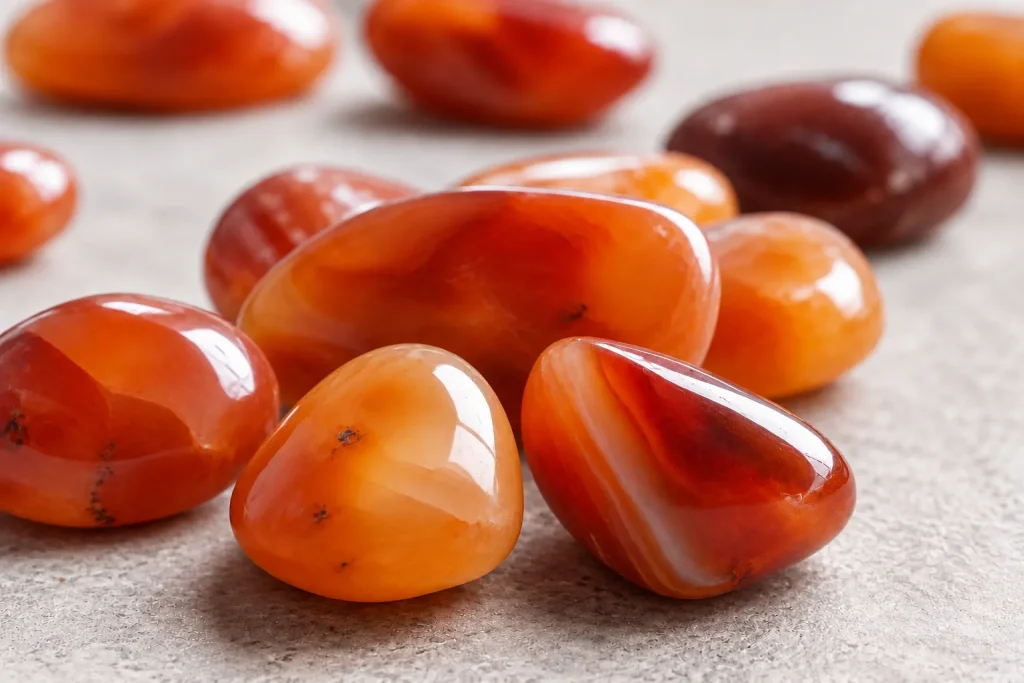
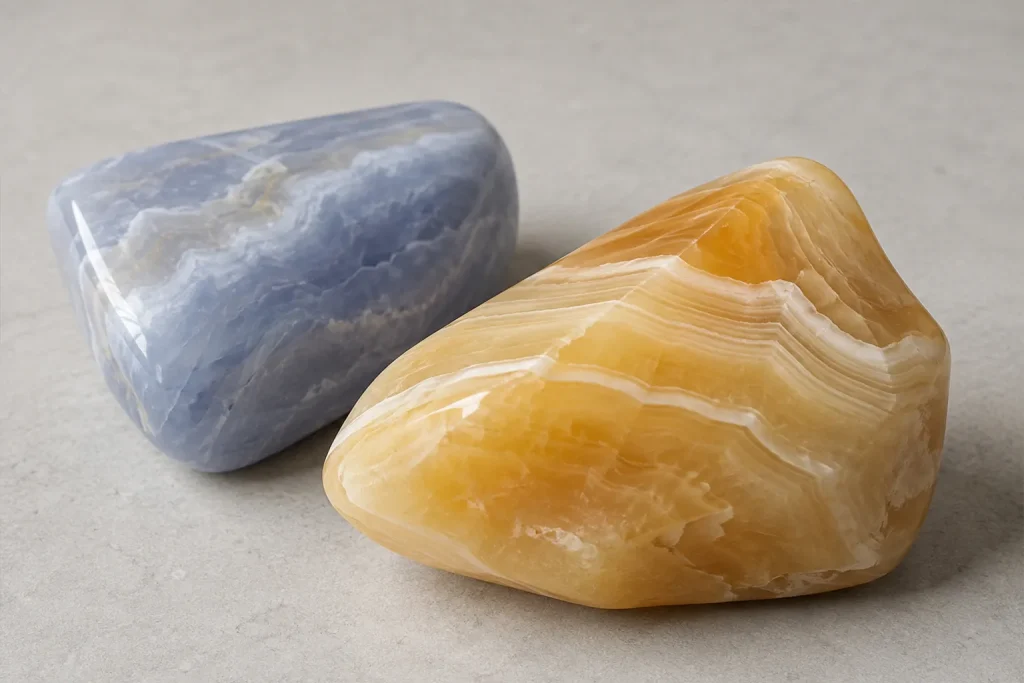
Agate is a type of chalcedony mineral that is typically banded or striped with different colours and patterns. The colours of agate can range from white and grey to blue, red, green, and brown, and it often has a translucent or opaque appearance. The patterns on agate are caused by the way the minerals in the stone crystallize.
Origin and Composition
Agate is found in many different places around the world, including Brazil, Uruguay, Mexico, and the United States. It is formed from volcanic rocks that are rich in silica and other minerals. The composition of agate includes microscopic quartz crystals that are arranged in layers, giving the stone its unique patterned appearance.
Energy and Healing Properties:
Agate is believed to have many energy and healing properties, making it a popular stone for those interested in alternative medicine. Some of the properties attributed to agate include:
- Promoting inner stability and balance
- Enhancing mental function and concentration
- Improving physical stamina and strength
- Helping to soothe and calm the mind and body
- Boosting confidence and self-esteem
History and Use in Jewellery
Agate has been used for thousands of years in jewellery and decorative objects. In ancient times, it was believed to have protective powers and was often worn as a talisman. Agate was also used in ancient Greece and Rome to make seals and cameos.
Today, agate is a popular gemstone for use in jewellery, especially for making beaded necklaces and bracelets. Its unique patterns and colours make it a favourite of many jewellery designers. Agate is also sometimes used in other decorative objects, such as vases and bowls. Overall, agate is a beautiful and versatile gemstone with a rich history and many interesting properties.

Aventurine
Aventurine is a stunning semiprecious gemstone renowned for its shimmering appearance and unique colours.
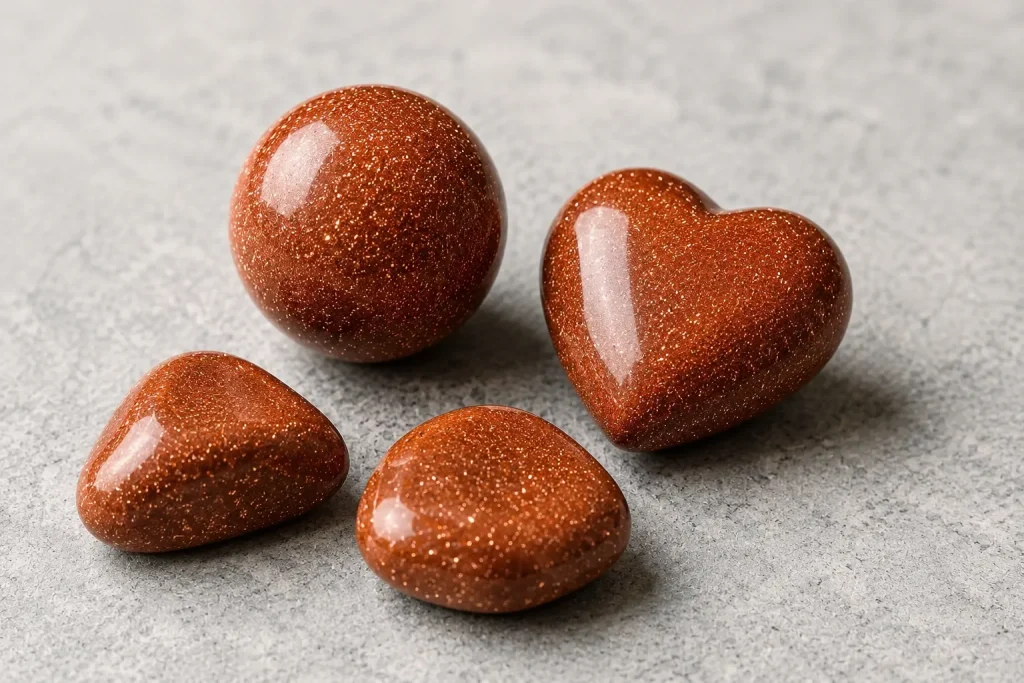
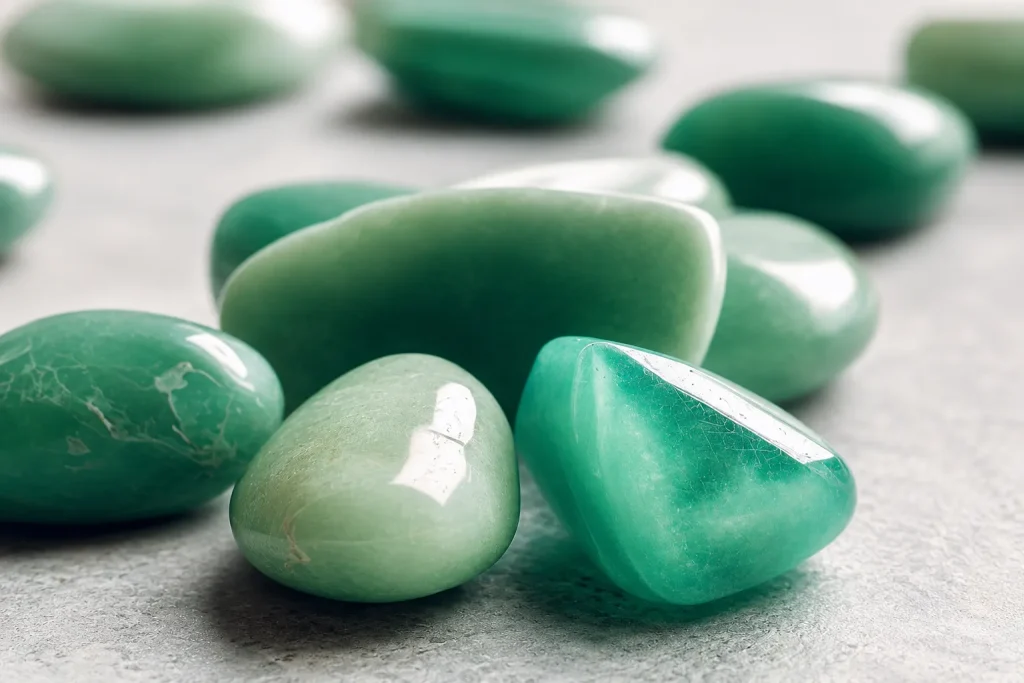
Appearance: Aventurine is a type of quartz that is often green, but can also be orange, yellow, brown, blue, or grey. It is characterised by its shimmering appearance, which is caused by tiny inclusions of mica or other minerals within the stone. The inclusions can also create interesting patterns within the stone.
Origin and Composition: Aventurine is found in many different places around the world, including India, Brazil, Russia, and South Africa. It is formed from quartz-rich rocks that have been subjected to heat and pressure. The inclusions of mica or other minerals are what give the stone its unique shimmering appearance.
Energy and Healing Properties: Aventurine is believed to have many energy and healing properties, making it a popular stone for those interested in alternative medicine. Some of the properties attributed to aventurine include:
- Enhancing creativity and imagination
- Promoting emotional balance and calm
- Boosting self-confidence and courage
- Improving physical health and well-being
- Attracting abundance and prosperity
History and Use in Jewellery: Aventurine has been used for thousands of years in jewellery and decorative objects. It was highly valued by the ancient Greeks and Romans, who used it to make cameos, signet rings, and intaglios. In more recent times, it has been used to make a wide range of jewellery, including earrings, necklaces, and bracelets. Aventurine is also sometimes used in other decorative objects, such as vases and bowls.
Overall, aventurine is a beautiful and versatile gemstone with a rich history and many interesting properties. Whether worn as jewellery or used for its energy and healing properties, aventurine is a wonderful addition to any collection.