Quartz: The Crystal of Geology, Light and Time
| Property | Information |
|---|---|
| Mineral family | Silicate |
| Composition | Silicon dioxide, SiO₂ |
| Hardness | 7 on the Mohs scale |
| Crystal system | Trigonal |
| Lustre | Vitreous, or glass-like |
| Transparency | Transparent to translucent; some varieties are opaque |
| Colours | Colourless, white, purple, pink, yellow, brown, grey and many others |
| Forms in | Igneous, metamorphic and sedimentary rocks; also hydrothermal veins |
If there’s one mineral that connects ancient mythology to modern technology, it’s quartz. It’s the crystal found in wristwatches and radios, the “eternal ice” of Greek legend, and one of the most abundant minerals on the entire planet. Chances are, whether you realize it or not, you’ve encountered quartz today already — in the sand on a beach, the countertop in a kitchen, or the tiny oscillator keeping time inside a clock. Here’s a closer look at where it comes from, how it forms, and why it’s held such a powerful grip on human imagination for thousands of years.
Where Quartz Is Found
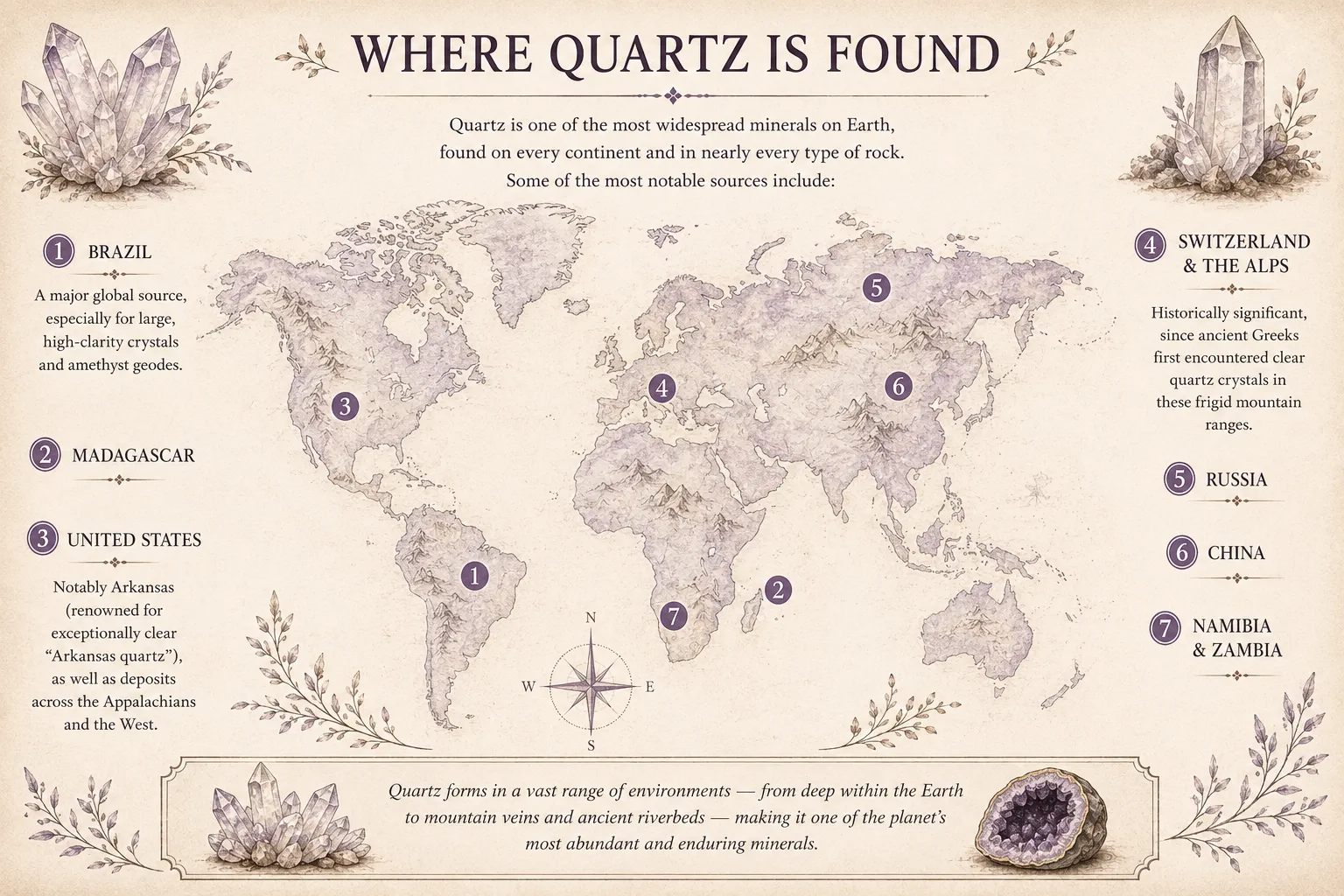
Quartz is one of the most widespread minerals on Earth, found on every continent and in nearly every type of rock. Some of the most notable sources include:
- Brazil — a major global source, especially for large, high-clarity crystals and amethyst geodes
- Madagascar
- United States — notably Arkansas (renowned for exceptionally clear “Arkansas quartz”), as well as deposits across the Appalachians and the West
- Switzerland and the Alps — historically significant, since ancient Greeks first encountered clear quartz crystals in these frigid mountain ranges
- Russia
- China
- Namibia and Zambia
Because quartz makes up such a large percentage of Earth’s crust, it’s genuinely difficult to find a region without at least some quartz-bearing rock nearby. It’s a primary component of granite, sandstone, and many other common rock types, and it’s the main mineral in most beach and desert sand.
When Was Quartz First Discovered?
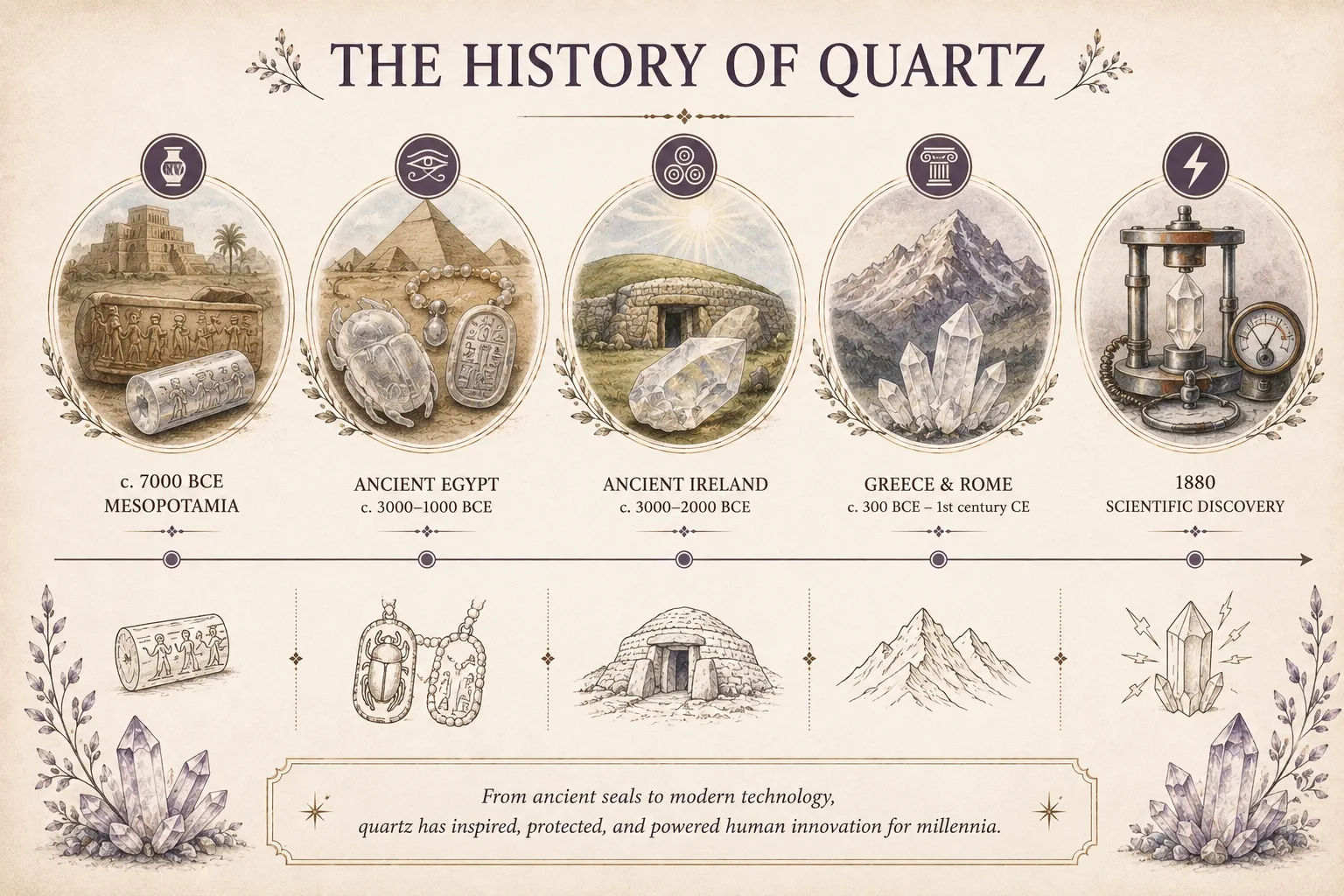
Quartz and quartz-rich stones have been used since prehistoric times for tools, ornaments and carved objects. In ancient Mesopotamia, varieties of quartz and chalcedony were later fashioned into beads, amulets and cylinder seals used to impress designs into clay. White quartz was also deposited around prehistoric monuments in Ireland, including Newgrange, where its brilliant appearance formed an important part of the site’s visual character.
The word crystal comes from the Greek krystallos, meaning ice. Classical writers recorded the belief that transparent quartz was water frozen so intensely that it could never melt. The word “quartz” itself is thought to derive from the German word Quarz, possibly rooted in an older term for a whitish vein mineral found in German mining regions.
Quartz’s story took a scientific turn in the 19th century: in 1880, brothers Jacques and Pierre Curie discovered that quartz crystals generate an electric charge when placed under mechanical stress — a property called piezoelectricity. This single discovery quietly transformed quartz from an ornamental stone into one of the most important materials in modern electronics.
Chemical Composition and Hardness
Quartz is a crystalline mineral composed of silicon dioxide, with the chemical formula SiO₂. Structurally, it’s built from repeating tetrahedra of one silicon atom surrounded by four oxygen atoms, each oxygen shared between two tetrahedra — a tightly bonded framework that gives quartz its notable strength and stability.
Key physical properties include:
- Hardness: 7 on the Mohs scale, hard enough to scratch glass and most other common minerals
- Crystal system: Trigonal
- Specific gravity: Approximately 2.65
- Lustre: Vitreous (glassy)
- Cleavage: None — quartz fractures conchoidally (in smooth, curved surfaces) rather than splitting along flat planes
- Piezoelectricity: Generates a small electrical charge under mechanical pressure, a property exploited in watches, radios, and other electronics
Because quartz is chemically stable and resistant to weathering, it tends to survive long after other minerals in the same rock have eroded away—which is a major reason it is so common in sand and sedimentary rocks.
How Quartz Is Formed
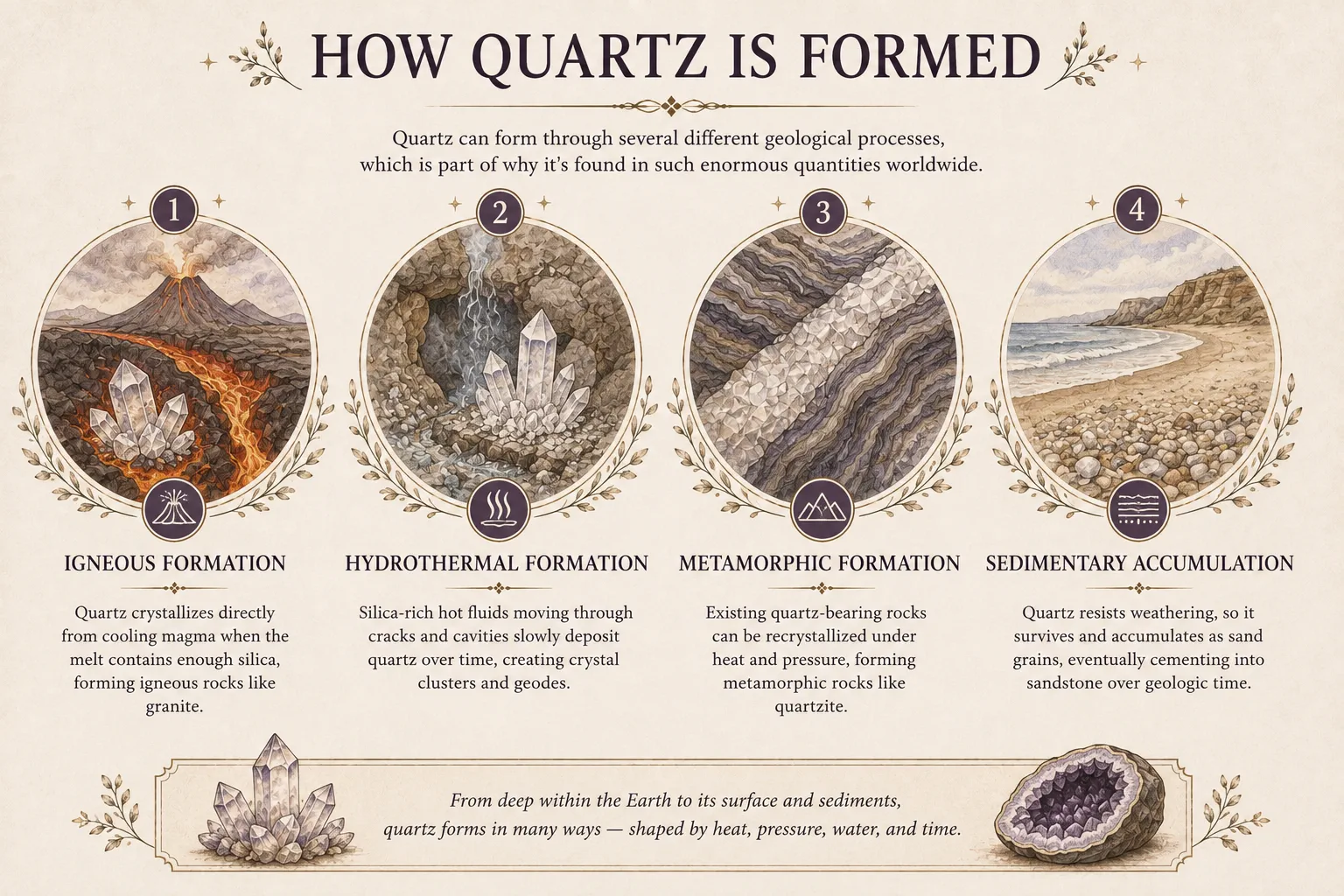
Quartz can form through several different geological processes, which is part of why it’s found in such enormous quantities worldwide:
- Igneous formation — Quartz crystallises as silica-rich magma cools, making it especially common in rocks such as granite.
- Hydrothermal formation — Silica-rich hot fluids moving through cracks and cavities in rock can slowly deposit quartz over time, producing the large, well-formed crystal clusters and geodes prized by collectors.
- Metamorphic formation — Existing quartz-bearing rocks can be recrystallized under heat and pressure, producing metamorphic rocks like quartzite.
- Sedimentary accumulation — Because quartz resists weathering so well, it survives the breakdown of other rocks and accumulates as sand grains, eventually cementing into sandstone over geologic time.
Quartz exists in two structural forms depending on temperature: low-temperature “alpha” quartz, stable up to about 573°C, and high-temperature “beta” quartz, stable above that threshold — a subtle atomic shift that has helped geologists reconstruct the temperature history of rocks that contain it.
Varieties of Quartz
Quartz comes in a huge range of colours and forms, most caused by trace impurities or structural irregularities within the crystal:
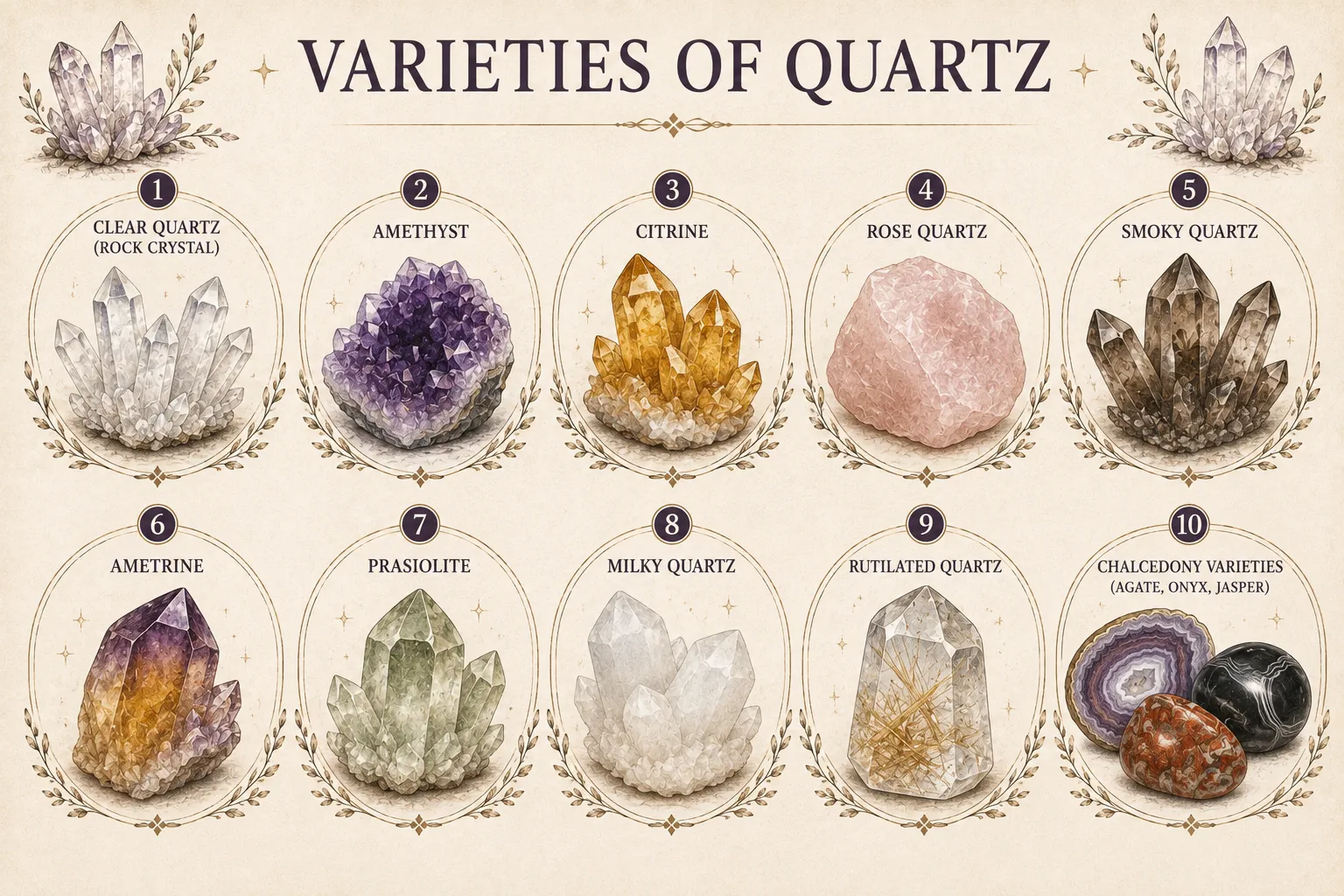
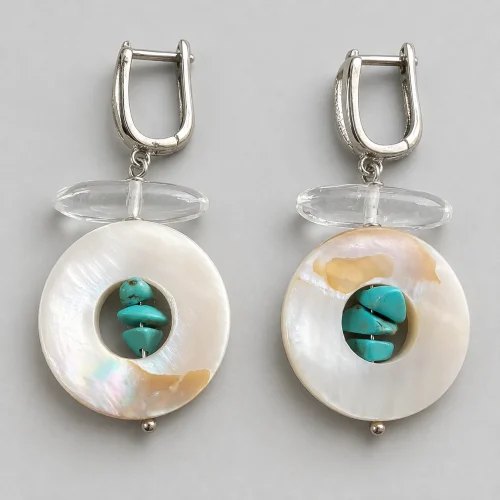
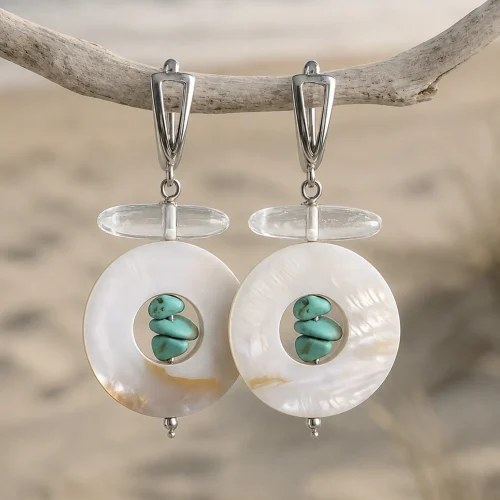
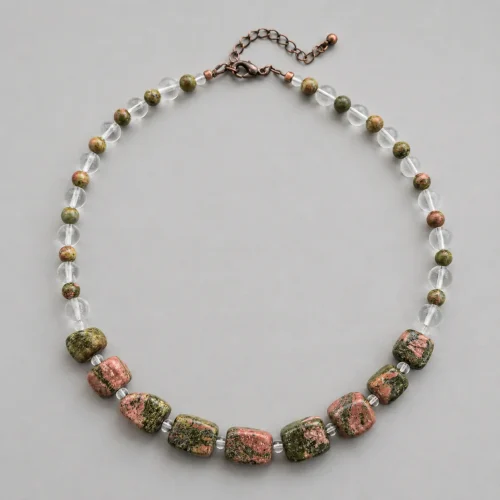
- Clear quartz (rock crystal) — colourless and transparent, the “purest” form
- Amethyst — purple, coloured by iron impurities combined with natural irradiation
- Citrine — naturally yellow to golden-brown quartz; much of the citrine sold commercially is produced by heating amethyst
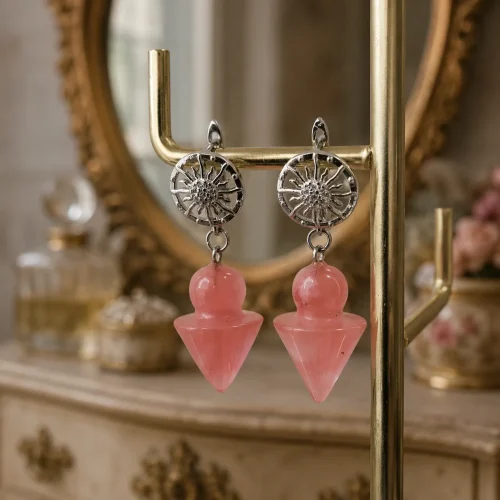
- Rose quartz — pale to deep pink quartz whose colour is associated with microscopic mineral inclusions or structural colour centres
- Smoky quartz — brown to gray-black, caused by natural irradiation
- Ametrine — a bicolour stone combining amethyst and citrine in a single crystal, named by combining both words
- Prasiolite — pale green quartz, usually produced by heat-treating amethyst
- Milky quartz — cloudy white, caused by tiny fluid or gas inclusions
- Rutilated quartz — clear quartz containing fine needle-like inclusions of rutile (titanium dioxide)
- Chalcedony varieties — a compact, very fine-grained member of the silica family that includes agate, onyx and jasper
Spiritual Beliefs and Symbolism
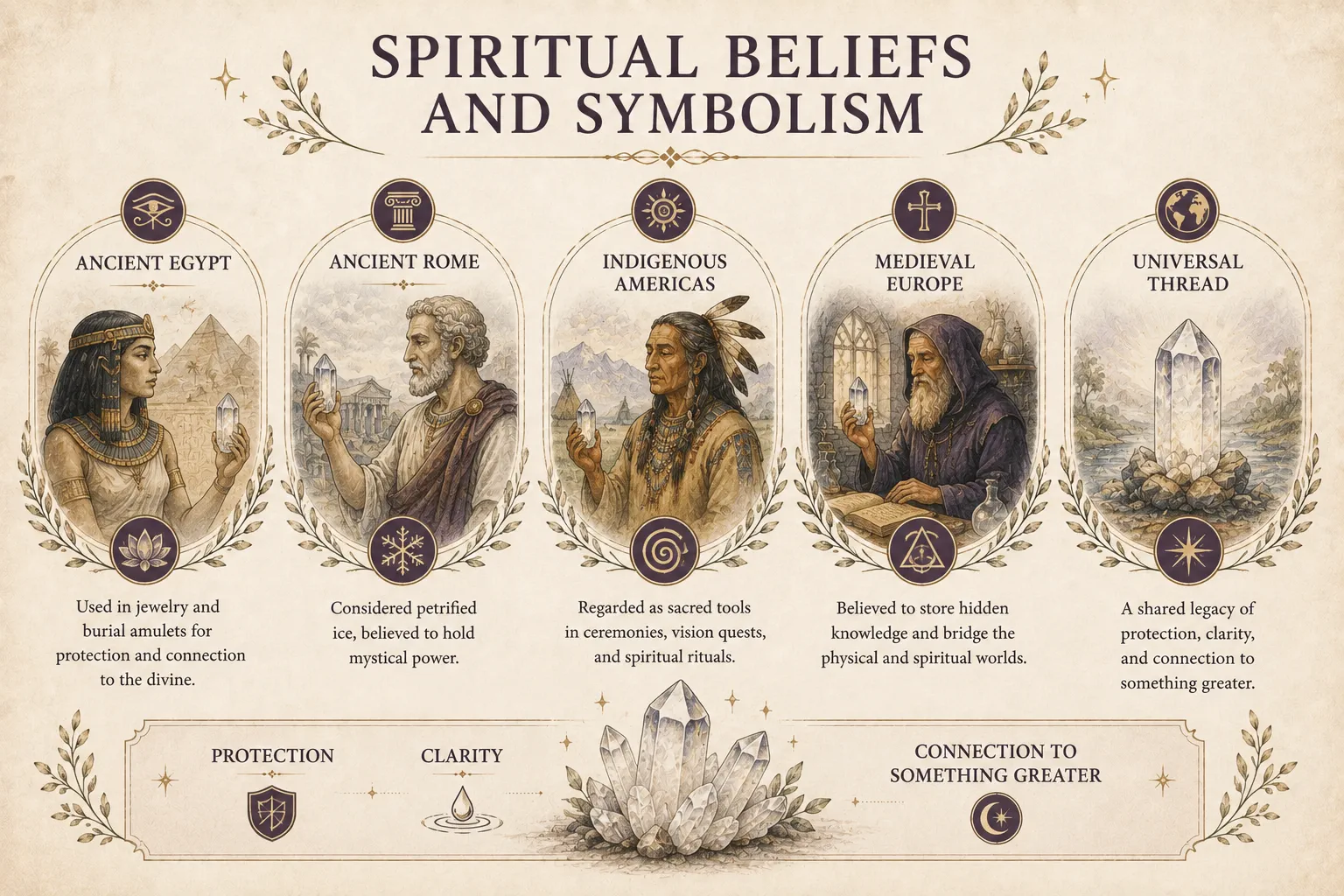
Quartz has acquired spiritual and symbolic meanings in many cultures, often inspired by its clarity, brightness and resemblance to ice or water. Ancient Egyptians used it in jewelry and burial amulets, believing it offered protection and helped facilitate communication with the divine. Romans considered it petrified ice, imbued with mystical power. Some Indigenous traditions in the Americas have treated quartz crystals as ceremonial or sacred objects, although their meanings and uses vary greatly between communities. In medieval Europe, alchemists and mystics believed quartz could store hidden knowledge and act as a bridge between the physical and spiritual worlds.
This remarkably consistent thread — protection, clarity, and connection to something greater — runs through nearly every tradition that has encountered the stone, likely helped along by its striking transparency and the way light seems to move through it almost like water or ice.
Astrological Associations
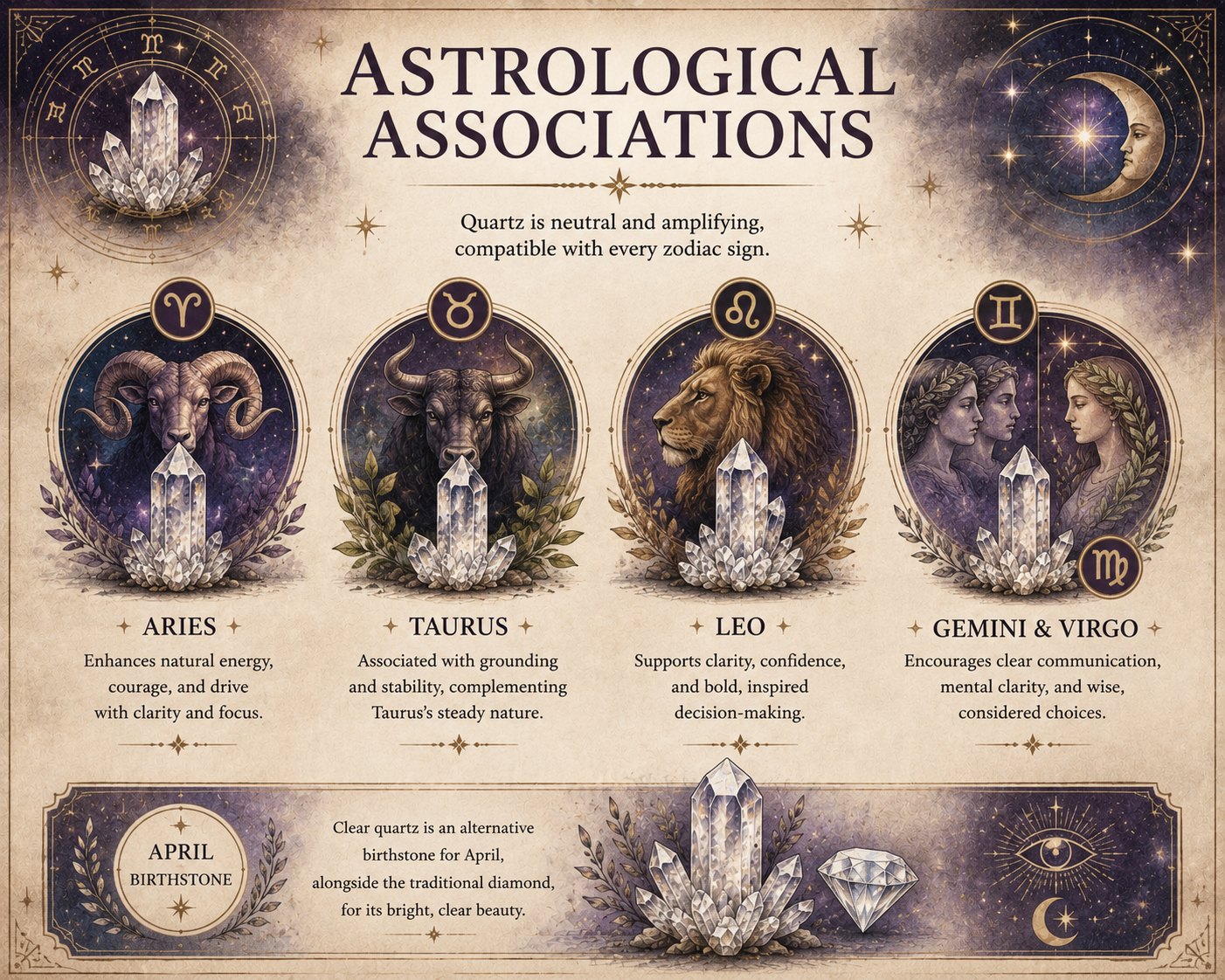
Because of its neutral, amplifying nature, quartz is one of the few stones considered compatible with every zodiac sign — but a few signs are especially associated with it:
- Aries — widely considered quartz’s primary zodiac match, believed to enhance Aries’s natural energy, courage, and drive with added clarity and focus
- Taurus — associated with grounding and stability, complementing Taurus’s practical, steady nature
- Leo, Gemini, and Virgo — also frequently mentioned in connection with quartz, particularly for supporting clarity, communication, and confident decision-making
Clear quartz is sometimes used as an alternative birthstone for April, alongside the traditional diamond, thanks to its similarly bright, clear appearance.
Healing and Meditation Practices
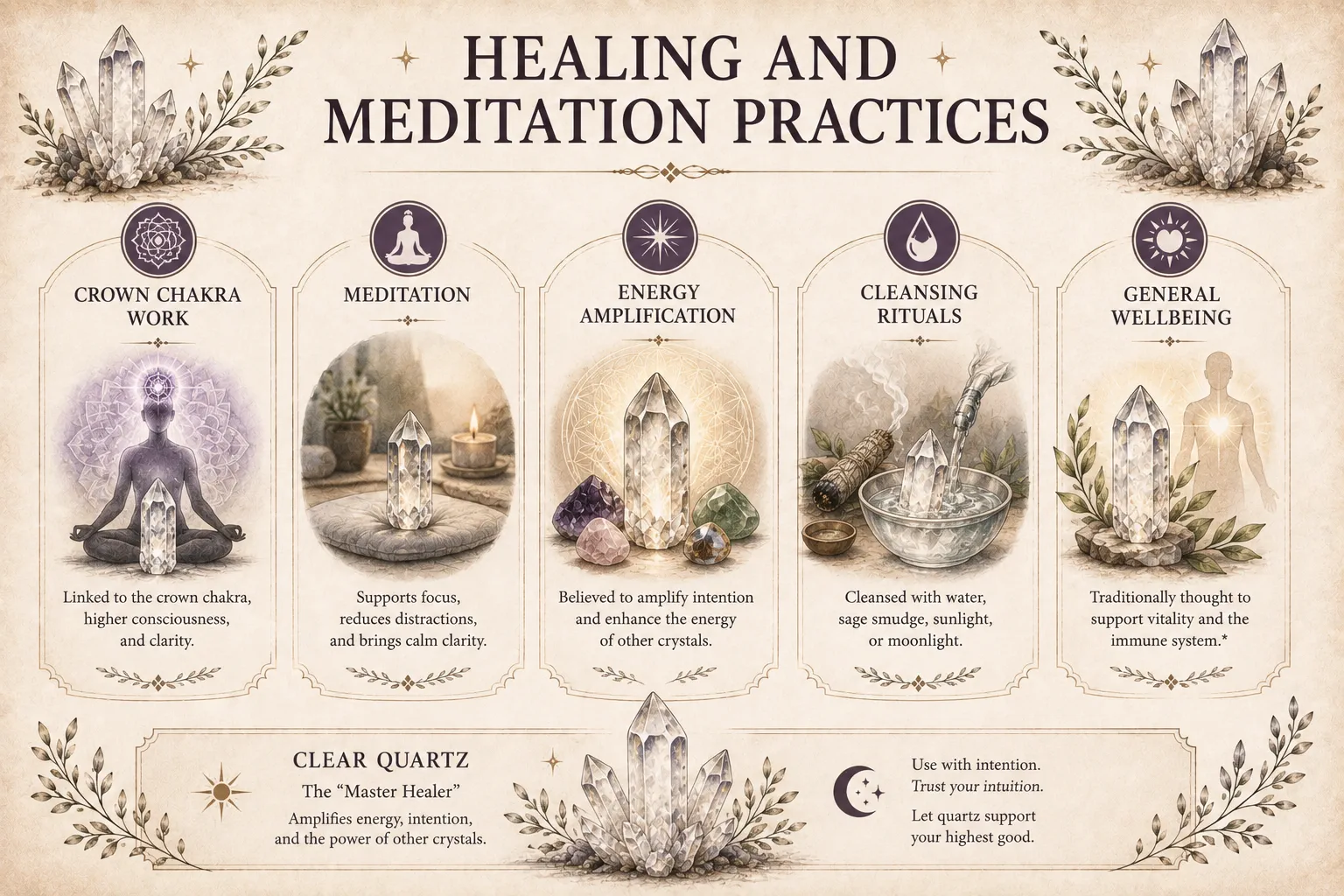
In modern crystal healing traditions, clear quartz is frequently called the “Master Healer,” based on the belief that it can amplify energy, intention, and even the properties of other crystals placed near it.
Common practices associated with quartz include:
- Crown Chakra work — clear quartz is most often linked to the crown chakra, associated with higher consciousness, spiritual connection, and clarity of thought
- Meditation — commonly held or placed nearby during meditation to support focus, filter out distractions, and encourage a sense of calm mental clarity
- Energy amplification — many practitioners believe quartz strengthens the intentions set during meditation or ritual, and is sometimes placed alongside other crystals to enhance their effects
- Cleansing rituals — some practitioners cleanse quartz using running water, smoke, moonlight or sound. Prolonged strong sunlight is best avoided for coloured varieties such as amethyst, as their colour may gradually fade.
- General wellbeing — sometimes used symbolically in practices centred on balance, vitality and personal intention
(Note: these are traditional folk beliefs and metaphysical claims, not scientifically established properties.)
Qualities Quartz Is Said to Improve
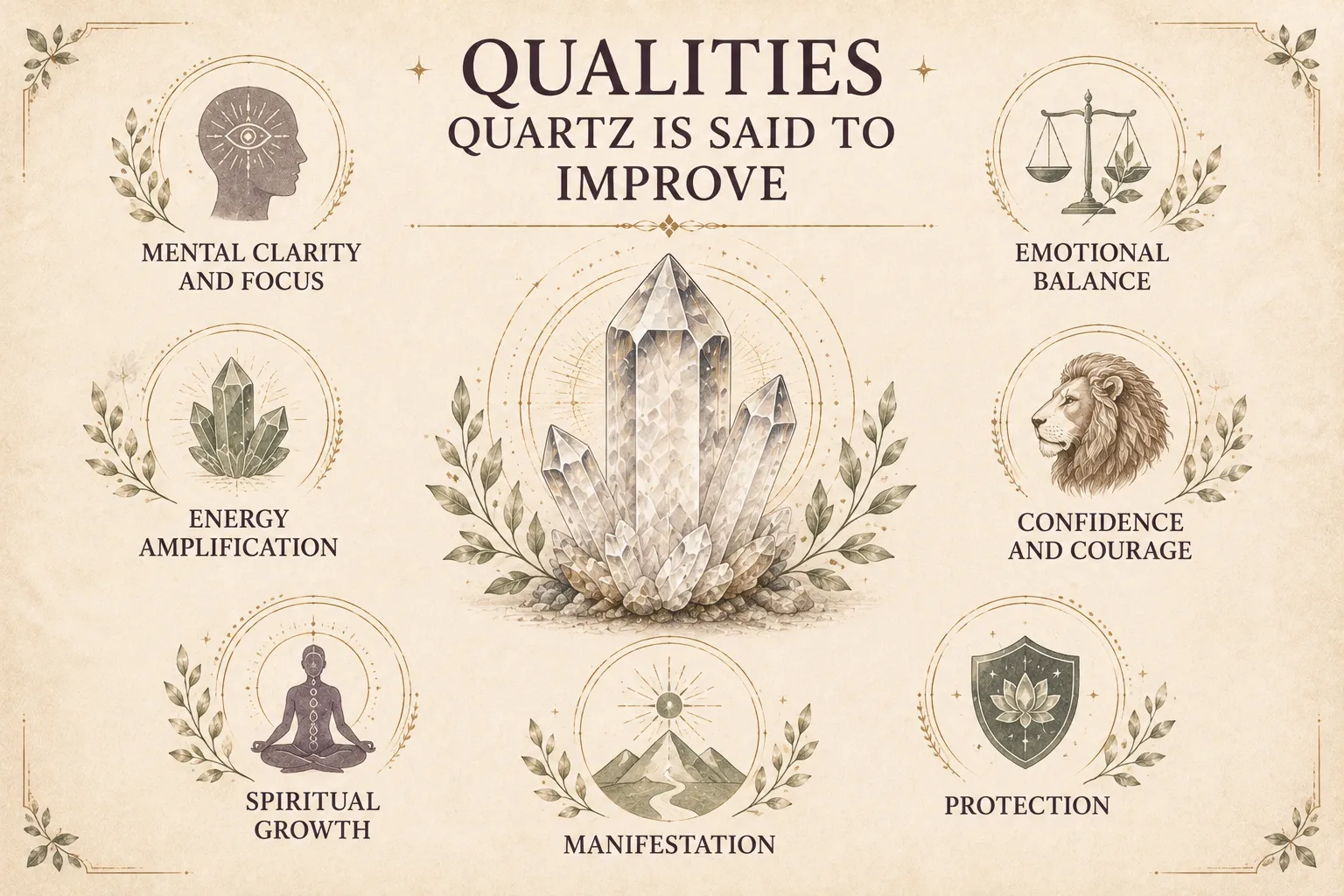
According to crystal healing traditions, quartz is thought to support:
- Mental clarity and focus — helping cut through distraction and confusion
- Energy amplification — believed to strengthen intentions, other crystals, and general vibrational energy
- Spiritual growth — associated with deeper meditation, higher awareness, and connection to the self
- Emotional balance — said to help clear negative energy and restore harmony
- Confidence and courage — echoed in its association with Aries and bold, forward-moving energy
- Protection — a long-standing belief tracing back to ancient Egyptian and Roman traditions
- Manifestation — often used in intention-setting rituals meant to help clarify and pursue personal goals
Interesting Facts About Quartz
- Quartz is piezoelectric — meaning it generates a small electric charge under mechanical pressure — a property discovered by Jacques and Pierre Curie in 1880 that eventually made quartz essential to the modern electronics industry, powering everything from wristwatches to radio transmitters.
- The word “crystal” didn’t originally refer to ice at all — it was coined specifically to describe clear quartz, which ancient Greeks mistakenly believed was water frozen so intensely by extreme cold that it could never thaw.
- Quartz is so abundant that it’s difficult to travel almost anywhere on Earth without encountering some — it’s a major component of granite, sandstone, and ordinary beach sand.
- The prehistoric Irish monument at Newgrange, thousands of years old, is faced with a finishing layer of bright white quartz, deliberately chosen for its brilliant appearance.
- Amethyst, citrine, rose quartz, and smoky quartz are all chemically identical to clear quartz — their colours come entirely from trace impurities or natural irradiation, not from any difference in their underlying silicon dioxide structure.
- Quartz exists in two distinct atomic forms depending on temperature, transitioning from “low” to “high” quartz at 573°C — a subtle structural shift that geologists use to help estimate the temperature conditions under which ancient rocks formed.
Whether encountered as a crystal growing inside a rock cavity, a grain of sand shaped by weathering, or a precise component inside a watch, quartz connects geological time with everyday human life. Few minerals have been simultaneously so ordinary, so beautiful and so quietly essential.